After nearly 30 years of development, the Lao Bao Special Economic and Trade Zone (SEZ) is at a pivotal turning point. Once a pioneering model for border economic development along the Vietnam–Laos border, Lao Bao thrived on preferential tax policies and vibrant cross-border trade. However, as these advantages have gradually diminished, the SEZ now faces an urgent need to transform itself to remain competitive along the East–West Economic Corridor (EWEC).
As Quang Tri province’s key trade gateway on the EWEC, the Lao Bao International Border Gate continues to maintain stable growth in import-export, trade, and services. By 2025, total import-export turnover through the border gate is projected to reach approximately USD 448 million, while state budget revenue is expected to exceed VND 446 billion. The number of vehicles passing through the area averages 300–500 per day, reflecting increasing connectivity and trade flows across the region.
Despite these positive indicators, infrastructure in the area is approaching its capacity limits. Customs inspection yards and logistics services are under increasing pressure, highlighting the urgent need for synchronized upgrades to match the scale and potential of the nearly 16,000-hectare economic zone.
On the ground, the Lao Bao International Border Gate presents a mixed picture. While long lines of container trucks and bustling cargo movement illustrate strong trade activity, the once-thriving commercial landscape has significantly changed. The image of Lao Bao as a vibrant “shopping paradise” has faded, with commercial centers now operating quietly. Many large investors have withdrawn following the expiration of preferential policies, leaving a business ecosystem dominated by small and medium-sized enterprises engaged mainly in trade and services. Industrial production remains limited and vulnerable to external fluctuations.
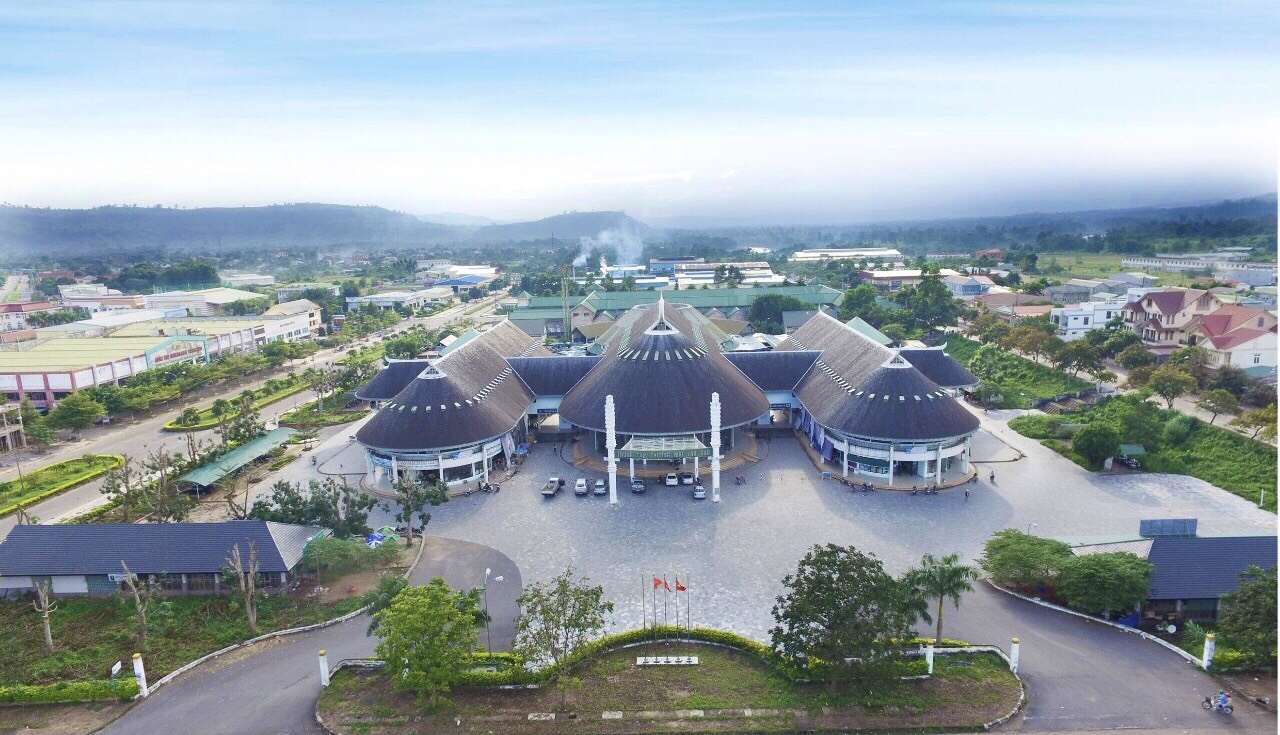
Lao Bao commune – Photo: Internet
In response, Quang Tri province is actively seeking new growth drivers by leveraging Lao Bao’s strategic location on the EWEC and aligning with major national development orientations. Key infrastructure projects, particularly the My Thuy deep-water seaport, are expected to open new trade gateways and position the province as an emerging logistics hub in Central Vietnam. Once operational, My Thuy port will serve as the eastern endpoint of the EWEC, strengthening regional connectivity.
A major breakthrough lies in the proposed Lao Bao–Densavan cross-border economic and trade zone, jointly promoted by Vietnam and Laos. This model introduces a new type of free trade zone based on the “5 common” mechanism, including shared planning, policies, infrastructure, management, and production space. It is expected to facilitate cross-border trade, reduce logistics costs, and create a more attractive and transparent investment environment.
At the same time, the Cam Lo–Lao Bao expressway project, with a total estimated investment of around VND 13,000 billion, will play a crucial role in enhancing connectivity between seaports and inland markets. Combined with the strong growth of Vietnam–Laos trade, which exceeded USD 2 billion in early 2025, these developments are expected to drive sustainable growth in trade turnover through Lao Bao at an annual rate of 15–20%.
Beyond economic impacts, the transformation of Lao Bao is also expected to bring significant social benefits. The development of industrial zones, logistics centers, and border tourism services could create between 5,000 and 7,000 jobs, improving local livelihoods and reducing regional disparities.
With strategic infrastructure, innovative policy frameworks, and strengthened cross-border cooperation, Lao Bao is poised for a new phase of development. The SEZ is expected not only to regain its position as a dynamic trade hub on the EWEC but also to become a symbol of sustainable growth and economic cooperation along the Vietnam–Laos border.
